TSMC's $100 Billion American Gamble Is Now Pouring Concrete — And It's Reshaping the Global AI Power Map
🤖 This article was AI-generated. Sources listed below.
The Biggest Construction Project You're Not Paying Enough Attention To
Somewhere in the Arizona desert, thousands of workers are building what amounts to the most strategically important real estate on the planet. Not a military base. Not an oil field. A semiconductor fabrication complex.
TSMC — the Taiwan Semiconductor Manufacturing Company, which produces the vast majority of the world's most advanced chips, including the GPUs powering nearly every frontier AI model — is in the middle of a $100 billion-plus investment to build multiple cutting-edge fabs on American soil.[¹] And as of mid-2025, the effort had already crossed major milestones: the first Arizona fab began producing chips using its advanced 4-nanometer-class process (specifically the N4 node), with additional fabs targeting even more advanced nodes in the years ahead.[²]
This isn't just a factory story. It's an AI infrastructure story, a geopolitical story, and — depending on who you ask — either the smartest industrial policy move the U.S. has made in decades or a cautionary tale about what happens when governments try to will supply chains into existence with subsidies.
Let's break it down.
Why This Matters for AI, Specifically
Here's the uncomfortable truth the AI industry doesn't love talking about: the entire generative AI revolution runs on a knife's edge of supply chain concentration.
NVIDIA designs the GPUs. But TSMC makes them. And until recently, TSMC made virtually all of its most advanced chips in Taiwan — an island that sits roughly 100 miles off the coast of China, across a strait that's been called the most dangerous flashpoint in global geopolitics.
Every H100, every B200, every cutting-edge AI accelerator that's been driving the training of GPT-5-class models? They've overwhelmingly been fabbed by TSMC. When AI leaders talk about "compute" as the bottleneck for progress, what they often really mean is: Can TSMC produce enough advanced silicon fast enough?
"Semiconductor manufacturing is the choke point of the entire AI ecosystem. Whoever controls fab capacity controls the pace of AI progress." — Chris Miller, author of Chip War [³]
The Arizona expansion is, at its core, an attempt to de-risk that choke point — or at least create a backup plan on friendlier geography.
What's Actually Being Built
The scope is staggering:
- Fab 1 (the first facility) began volume production in the first half of 2025 using TSMC's N4 process technology — a 4nm-class node used for many of today's leading AI chips.[²]
- Fab 2 is targeting more advanced process nodes (reportedly 3nm-class and below), with production expected in the 2027-2028 timeframe.[¹]
- A third fab has been announced, pushing the total investment north of $65 billion initially, later expanded to over $100 billion with additional commitments.[⁴]
- The U.S. government, through the CHIPS and Science Act, has committed billions in subsidies and tax credits to sweeten the deal — reportedly up to $6.6 billion in direct grants for TSMC's Arizona operations, plus billions more in loans and tax incentives.[⁵]
The sheer scale puts this among the largest foreign direct investments in American history.
The Geopolitical Chess Game
Let's be blunt about what's driving this: Taiwan anxiety.
U.S. policymakers have spent years wrestling with a terrifying scenario: What happens to the global economy — and specifically to AI development — if a conflict in the Taiwan Strait disrupts TSMC's operations? The answer, according to virtually every analysis, is catastrophic.
"We cannot be in a position where the most sophisticated technology in the world is made in a place that could be subject to coercion or conflict." — Gina Raimondo, former U.S. Secretary of Commerce [⁵]
The CHIPS Act wasn't subtle about its motivations. It was designed to bring semiconductor manufacturing back to the U.S. after decades of offshoring. TSMC's Arizona investment is the crown jewel of that effort.
But here's where it gets complicated.
China is watching closely — and responding. Beijing has been pouring money into its own domestic chip industry, trying to reduce its dependence on TSMC and Western equipment. The U.S. export controls on advanced chip technology, tightened repeatedly since 2022, have only accelerated China's push for self-sufficiency in AI hardware.[⁶]
We're watching the real-time formation of two parallel semiconductor ecosystems — one Western-aligned, one China-aligned. The Arizona fabs are a cornerstone of the Western one.
The Challenges Nobody Wants to Talk About
It's not all smooth concrete and ribbon cuttings. The Arizona project has hit real bumps:
Labor and culture clashes. Early in the construction process, there were widely reported tensions between TSMC's Taiwanese management style and American construction workers and engineers. Reports surfaced of TSMC bringing in hundreds of workers from Taiwan, leading to friction with local labor unions and sparking debates about work culture expectations.[⁷]
Cost overruns. Building cutting-edge fabs is insanely expensive anywhere, but doing it in the U.S. — where construction labor costs are higher, permitting is more complex, and the fab workforce ecosystem is thinner — adds significant overhead. Some estimates suggest building a fab in the U.S. costs 30-50% more than in Taiwan.[³]
Yield questions. The ultimate test of any fab isn't whether it can produce chips — it's whether it can produce them at the yields (percentage of usable chips per wafer) needed to be economically viable. TSMC's Arizona yields reportedly improved significantly by early 2025, but matching the world-class performance of its Taiwan operations remains an ongoing effort.[²]
Water and power. Arizona is a desert. Advanced chip fabs consume enormous quantities of both ultra-pure water and electricity. The region is already grappling with long-term water supply concerns, and the power demands of multiple fabs — on top of the data center boom already straining grids nationwide — are non-trivial.[⁸]
The Bigger Power and Infrastructure Picture
This connects to a broader theme that's become impossible to ignore in 2025-2026: AI is becoming an infrastructure story as much as a software story.
The chips need fabs. The fabs need power. The AI models need data centers. The data centers need power. Everyone needs power. And the grid is struggling to keep up.
Microsoft, Google, Amazon, and Meta have all made massive data center commitments, with some turning to nuclear power, natural gas, and even reviving retired power plants to feed the beast.[⁸] TSMC's Arizona fabs add another layer of demand to an already strained system.
Bold prediction: Within the next few years, the constraint on AI progress won't be algorithmic cleverness or model architecture innovation. It'll be electrons and water — the utterly unsexy physical inputs that make everything else possible.
What This Means for the AI Industry
Here's the bottom line for anyone watching the AI space:
Domestic chip production is no longer theoretical. Advanced AI chips are now being manufactured on American soil. That's a genuine shift, even if the volumes are still a fraction of TSMC's Taiwan output.
Supply chain diversification will accelerate. Expect Samsung (already building in Texas), Intel (investing heavily in Ohio, Arizona, and elsewhere), and potentially others to push their own advanced fab expansions. The era of "just ship it all from Hsinchu" is ending.
Chip costs may rise before they fall. All of this reshoring and diversification isn't cheap. Those costs will, at some level, flow through to the price of AI compute — at least in the near term.
The U.S.-China AI hardware gap is widening — for now. Export controls plus domestic production create a significant advantage for U.S.-aligned AI companies. But China's determination to close that gap shouldn't be underestimated.
Infrastructure is the new moat. Forget model benchmarks for a minute. The companies and countries that secure reliable access to advanced chips, abundant power, and sufficient cooling water are the ones that will dominate the next decade of AI.
The View From 30,000 Feet
There's something almost poetic about the situation: the most sophisticated technology humans have ever created — chips with transistors measured in atoms — being built in the middle of a desert because of fears about an island 7,000 miles away.
TSMC's Arizona bet is messy, expensive, politically fraught, and absolutely essential. Whether it ultimately succeeds as a business proposition (making chips as efficiently and cheaply as Taiwan) remains an open question. But as a strategic proposition — ensuring that the hardware backbone of the AI revolution doesn't depend entirely on one geographically vulnerable island — it's already paying dividends.
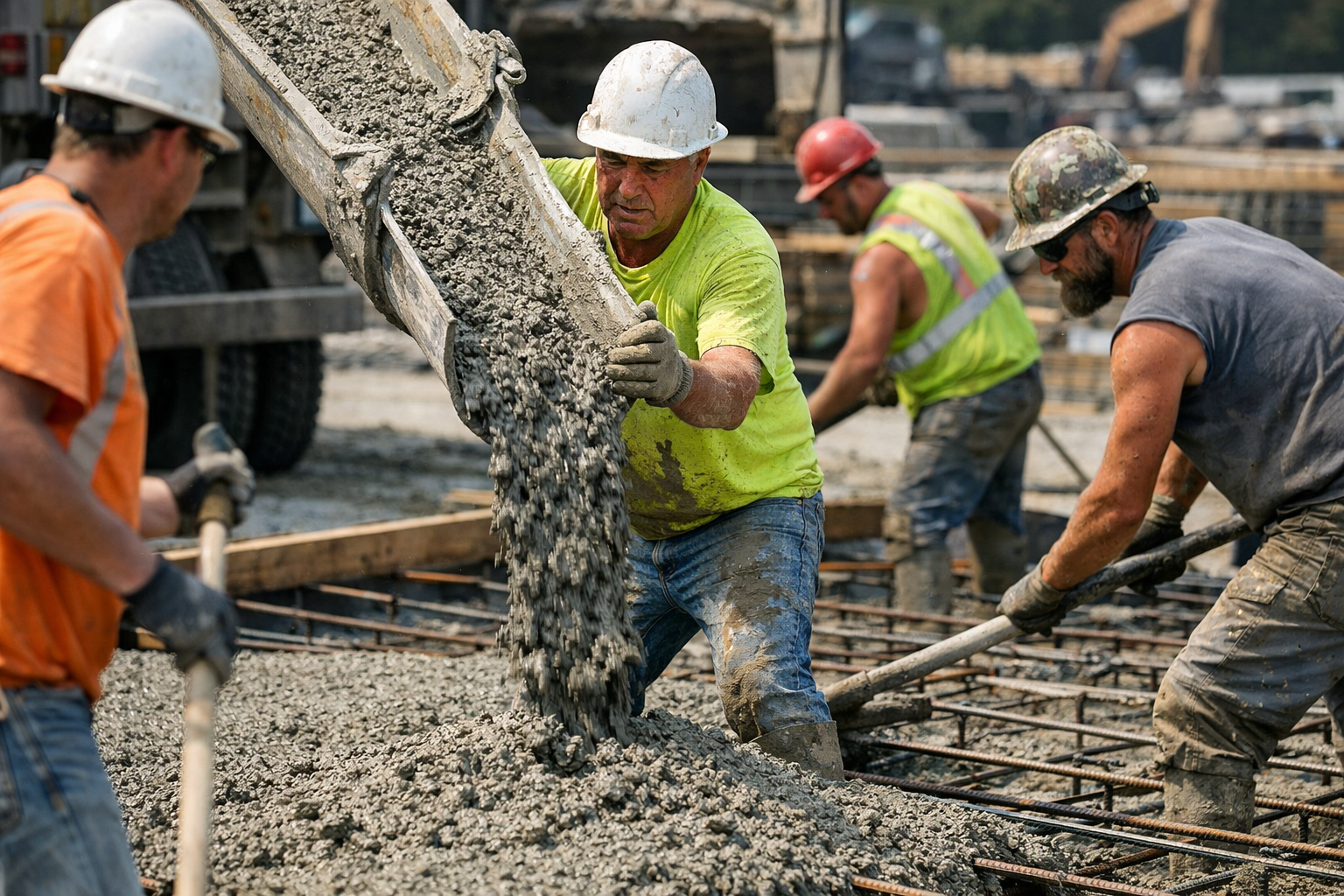
The AI future isn't just being written in Python and PyTorch. It's being poured in concrete and etched in silicon, right now, in the Arizona sun.
Sources
- Reuters: TSMC plans to invest over $100 billion in U.S. chip plants
- TSMC Official Newsroom
- Chris Miller, Chip War (Simon & Schuster)
- NYT: TSMC Expands Arizona Investment With Third Chip Factory
- U.S. Department of Commerce: CHIPS for America
- Bloomberg: China's Chip Industry Pushes for Self-Sufficiency
- NYT: Inside TSMC's Struggle to Build a Chip Factory in America
- WSJ: The AI Power Crisis — Data Centers and the Grid