The World on May 4, 2026: Hormuz Tensions, SCOTUS Rulings, Met Gala Protests — And Why AI Should Care About All of It
🤖 This article was AI-generated. Sources listed below.
Some days, the news feels like someone threw a dart at every section of the newspaper simultaneously. May 4, 2026 is one of those days. Military convoys in the Persian Gulf, a Supreme Court ruling that just redrew the map — literally — of voting rights, oil prices spiking, missiles intercepted over the UAE, Jeff Bezos getting heckled on a red carpet, and a former FBI director indicted over… seashells. Let's break it all down.
TL;DR
| Story | Key Takeaway |
|---|---|
| 🚢 Strait of Hormuz | US military escorting merchant vessels through contested waterway; Iran claims it struck a US warship (Pentagon denies) |
| ⚖️ SCOTUS Ruling | Supreme Court strikes down Louisiana's second majority-Black congressional district as racial gerrymander |
| 📉 Markets | Nasdaq and S&P 500 hit records Friday, but Monday turned volatile on Iran-UAE missile tensions |
| 🐚 Comey Indictment | Former FBI director indicted over seashell image interpreted as coded political threat |
| 💣 Lebanon | Israel killed 41 in Lebanon despite active ceasefire; China plans UN Charter debate as Security Council president |
| 👗 Met Gala | Protesters targeted Bezos at fashion's biggest night amid global turmoil |
| 🔒 DHS Phones | Inspector General finds DHS failed to properly secure its phone communications |
| 🗓️ Lighter Notes | Star Wars Day, Eurovision preview, meteor shower, Meta layoffs, Giuliani health update |
🚢 The Strait of Hormuz: America's Floating Highway
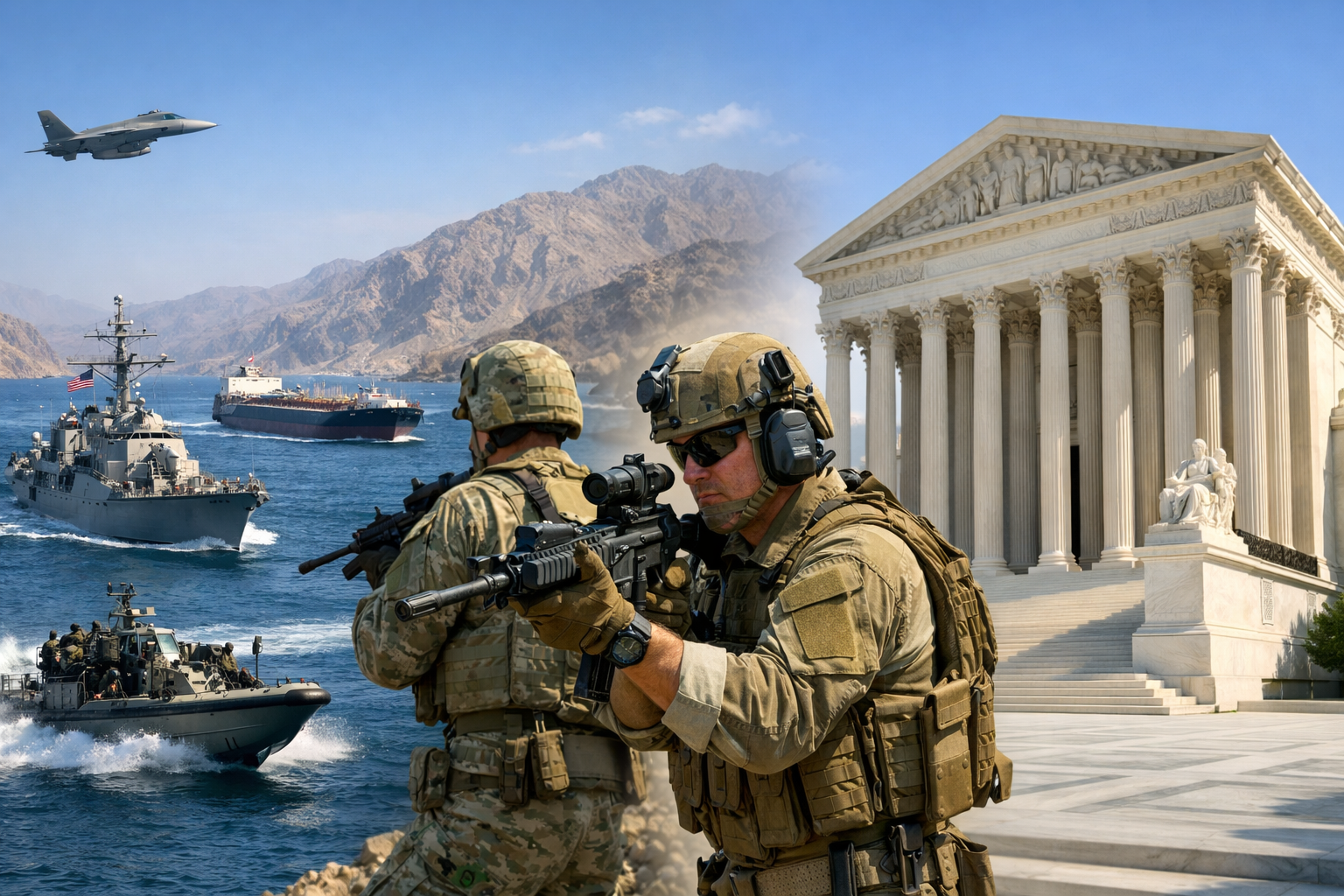
The biggest story of the week — arguably the month — is playing out in one of the most strategically important waterways on Earth. The Strait of Hormuz, a narrow chokepoint between Iran and Oman through which roughly a fifth of the world's oil supply flows, has become a live conflict zone.
On May 4, US Central Command confirmed that two American-flagged merchant vessels successfully transited through the Strait of Hormuz. The US military was actively guiding commercial ships from what President Trump described as "neutral and innocent" countries through the waterway.
Think of it like this: imagine the busiest highway in your city suddenly had armed checkpoints, and the National Guard was personally escorting delivery trucks through. That's essentially what's happening — but on water, with oil tankers, and the stakes are global energy markets.
Iran claimed it struck a US warship in the strait, but the Pentagon flatly denied it.
Meanwhile, Trump poured cold water on diplomacy, stating he did not expect Iran's latest peace offer to be acceptable. The UAE added another layer of tension by announcing it had intercepted missiles fired from Iran — a development that immediately rattled Wall Street.
This isn't just a military story. It's an energy story, a trade story, and increasingly, a technology story. The logistics of guiding hundreds of commercial vessels through a contested waterway in real-time involves satellite tracking, predictive routing, and communication systems that lean heavily on AI-assisted intelligence. When the world's oil supply hangs in the balance, the margin for error is zero.
⚖️ The Supreme Court Just Redrew Louisiana's Political Map
In a ruling that will reverberate through the 2026 midterms and beyond, the Supreme Court struck down a Louisiana voting map that had created a second majority-Black congressional district, declaring it an unconstitutional racial gerrymander.
Let's unpack that with an analogy. Imagine you're cutting a birthday cake for a party. You could slice it so everyone gets a fair piece, or you could carve it into weird, jagged shapes that guarantee certain guests get crumbs while others get frosting mountains. Redistricting is cake-cutting for democracy — and the Court just said Louisiana's knife work crossed a constitutional line.
The ruling is significant because it narrows the legal path for creating majority-minority districts, which have historically been used to ensure communities of color have meaningful representation in Congress. Voting rights advocates are likely to view this as a major setback.
For the AI world, this matters more than you might think. Redistricting is increasingly driven by algorithmic mapping tools, though the extent of their influence in this particular case is not established by current reporting. The datasets, optimization criteria, and boundary-drawing software used in modern gerrymandering (and anti-gerrymandering efforts) are deeply computational. When courts rule on the legality of a map, they may increasingly be ruling on the outputs of algorithms — even if nobody in the courtroom says the word "AI."
📉 Markets: A Tale of Two Moods
Wall Street came into Monday riding high — the Nasdaq and S&P 500 had both hit intraday and closing records on Friday, May 1. But the mood soured quickly on Monday as the Iran-UAE missile interceptions and Hormuz tensions sent oil prices surging and stocks into mixed territory.
When oil spikes, everything downstream gets more expensive — from shipping AI servers to powering data centers.
The market volatility is a reminder that AI's explosive growth doesn't happen in a vacuum. Every GPU cluster, every cloud data center, every training run consumes energy. And when geopolitical conflict threatens the global oil supply, the cost of keeping the AI revolution humming goes up — fast.
🐚 The Comey Indictment: Seashells and Symbolism
In one of the stranger legal stories of the year, former FBI Director James Comey was indicted over an image he posted of seashells arranged to spell "86 47." Acting Attorney General Todd Blanche publicly defended the indictment.
For those unfamiliar with the slang: "86" is restaurant industry shorthand for getting rid of something (as in "86 the soup, we're out"). "47" refers to the 47th president. You can connect the dots.
Whether you see this as legitimate law enforcement or political overreach likely depends on where you sit politically. But from an AI and tech perspective, the case raises a fascinating question: at what point does a social media post — interpreted through layers of cultural context, slang, and ambiguity — become a criminal act? AI content moderation systems struggle with exactly this kind of contextual interpretation every single day. If federal prosecutors are parsing seashell arrangements for coded threats, imagine the challenge facing an algorithm trying to do the same thing at scale across billions of posts.
💣 Lebanon: Ceasefire in Name Only
In a grim development that received less attention than it deserved, Israel killed 41 people in Lebanon despite an active ceasefire and issued new displacement orders for southern Lebanese towns.
The word "ceasefire" is supposed to mean something. When it doesn't, the erosion of trust in international agreements has cascading effects — on diplomacy, on refugee flows, on the credibility of the institutions meant to prevent exactly this kind of violence.
China, which holds the UN Security Council presidency for May 2026, has planned a ministerial open debate on upholding the UN Charter. The timing feels less like coincidence and more like commentary.
👗 The Met Gala: Fashion, Fury, and Jeff Bezos
May 4 also brought the annual Met Gala — fashion's biggest night out — but this year's event carried extra political charge. Protesters targeted Amazon founder Jeff Bezos, who served as the gala's lead sponsor.
The juxtaposition is hard to ignore: on the same day that oil prices spiked, missiles were intercepted, and 41 people died in Lebanon, Manhattan's elite gathered for a party where a single ticket reportedly costs $75,000. The protesters made sure that dissonance wasn't lost on anyone.
For the tech world, Bezos's increasing visibility at cultural tentpole events — and the backlash it generates — is part of a larger story about how Big Tech billionaires are perceived in 2026. The AI boom has minted enormous wealth, and the public is paying attention to where that money goes.
🔒 DHS Phone Security Failure
An Inspector General report found that the Department of Homeland Security failed to properly secure its phones — a finding that's both unsurprising and alarming.
In an era where AI-powered surveillance, biometric tracking, and predictive threat modeling are central to homeland security operations, the inability to secure basic communications devices is a foundational failure. You can't build a smart house on a cracked foundation.
🗓️ The Lighter Side of May 4
Not everything is geopolitical tension and market volatility. A few brighter notes:
- Star Wars Day — May the 4th be with you. Always. 🌟
- The Eurovision Song Contest kicks off May 12–16 in Vienna.
- NASA's Eta Aquarid meteor shower is putting on a show this month — dust from Halley's Comet burning up in our atmosphere.
- Meta layoffs were trending in early May, adding to the ongoing reshuffling of the tech workforce.
- Rudy Giuliani was reported to be breathing on his own after a health scare.
The AI Thread Through Everything
Here's the thing that ties all of these stories together: AI isn't a separate beat anymore. It's woven into maritime navigation systems guiding ships through conflict zones. It's in the redistricting algorithms that draw (and redraw) voting maps. It powers the trading systems that react to missile interceptions in milliseconds. It moderates the social media posts that can now apparently lead to federal indictments. It secures — or fails to secure — government communications.
The world of May 4, 2026 isn't a world where AI exists "over there" in Silicon Valley labs. It's a world where AI is the invisible infrastructure underneath almost every headline. Understanding that infrastructure — how it works, who controls it, and what happens when it fails — isn't optional anymore.
It's the news.
Sources
- The News Roundup For May 1, 2026 : 1A : NPR
- Live updates: Iran war, US says two American-flagged merchant vessels have gone through Strait of Hormuz | CNN
- Justice Department Still Open to Investigating Fed Chair Powell - The New York Times
- Stock Market Today (May 4, 2026) - TheStreet
- The New York Times - Breaking News
- Headlines for May 04, 2026 | Democracy Now!
- Five Things to Know, May 4, 2026 | The American Legion
- Trending This Week: May 4, 2026 - Forekast