America Is Terrified of AI. China Isn't. That Gap Should Worry You More Than Any Chatbot.
🤖 This article was AI-generated. Sources listed below.
The Fear Gap Is Real — And It's Not Who You Think
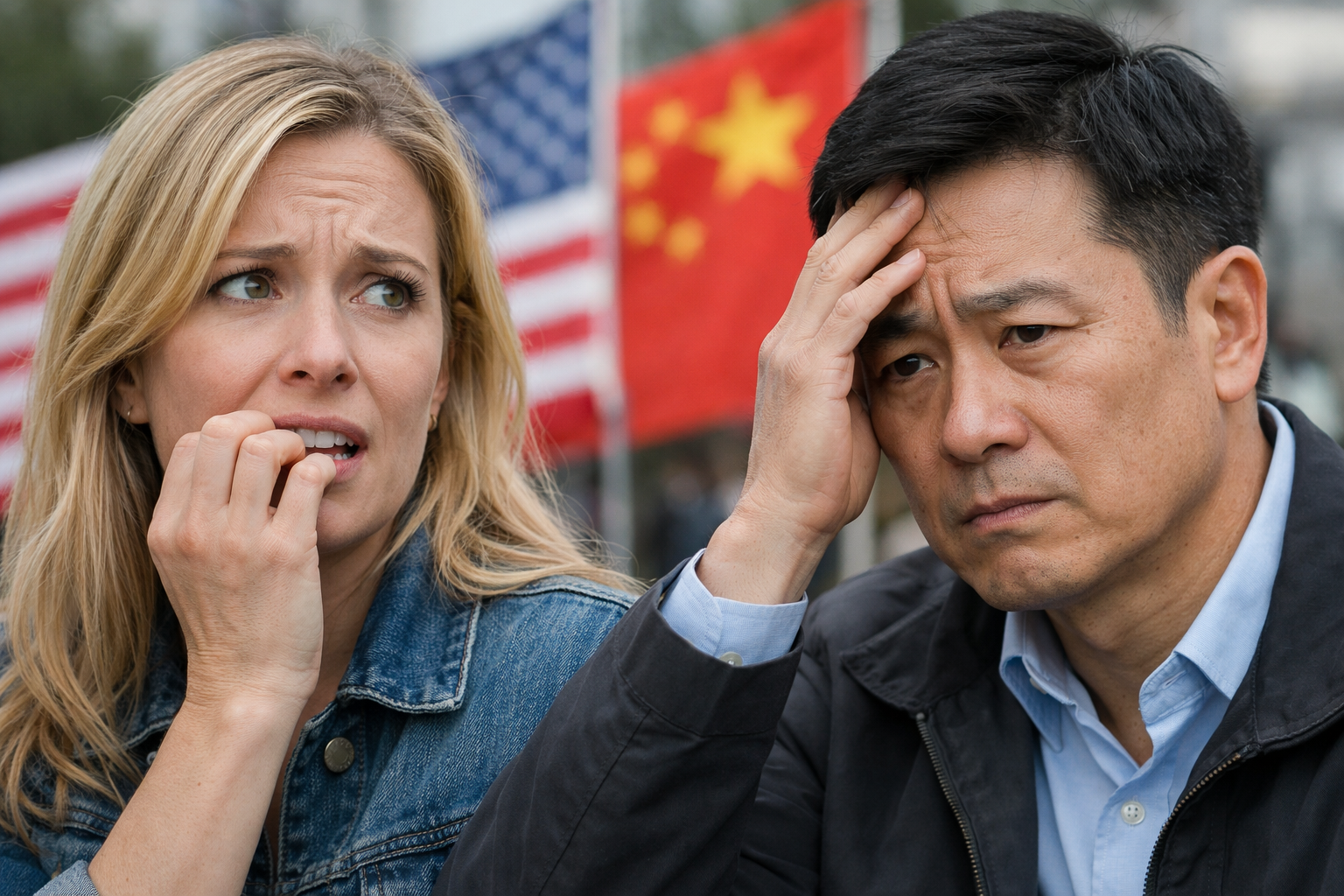
Here's a question that should keep every American tech leader, policymaker, and citizen up at night: Why is China — a country with far less press freedom and far more state control — doing a better job than the US at getting its population on board with artificial intelligence?
A sharp NYT opinion piece published May 9 dug into this paradox, and the answer isn't "propaganda" or "censorship." It's simpler and more damning: China's AI strategy is practical, comprehensible, and oriented toward visible outcomes that ordinary people can grasp. [¹] America's AI narrative, by contrast, is a fever dream oscillating between "this will cure cancer" and "this will end civilization" — often in the same news cycle, often from the same people.
Let me be clear about the stance I'm taking: the United States' inability to build public consensus around AI is becoming a strategic liability, and the blame falls squarely on leaders who treat AI policy like a culture war football rather than an infrastructure challenge.
TL;DR
| Key Takeaway | Detail |
|---|---|
| The Fear Gap | China's public is more receptive to AI than America's — not because of censorship, but because China tells a clearer, more practical story about what AI is for. |
| US Policy Whiplash | The White House reversed its own AI oversight stance within months, reflecting a lack of coherent strategy. |
| Narrative Vacuum | The US isn't benefiting from healthy democratic debate — it's suffering from an absence of any unified AI vision. |
| What Would Work | Concrete national priorities, sector-specific regulation, AI literacy funding, and a proactive (not reactive) strategy. |
| Bottom Line | The AI race will be won by whoever builds the smartest consensus, not just the smartest model. |
China's Secret Weapon: Boring, Legible Strategy
The NYT piece makes a crucial observation: China's approach to AI isn't wrapped in existential drama. It's framed around manufacturing efficiency, logistics, healthcare delivery, and economic competitiveness. Citizens can see what AI is for. It's not abstract. It's not a debate about sentient machines or superintelligence. It's about making factories smarter and hospitals faster. [¹]
This matters enormously because public buy-in is infrastructure. You can build the most advanced AI models on Earth, but if your own population is split between techno-utopians promising immortality and doomers predicting extinction, you get what we have now: policy paralysis dressed up as debate.
And the evidence for that paralysis? Look no further than this past week.
The White House Whiplash
The White House just reversed course on AI oversight, implementing new restrictions after initially holding back out of fear that regulation would hand China the advantage. [¹] Read that sentence again. The US government's AI policy effectively went:
- Step 1: Don't regulate AI because China will win.
- Step 2: Actually, regulate AI.
- Step 3: ???
This isn't strategy. This is a weather vane.
The problem isn't that the US is regulating or not regulating AI — it's that nobody can articulate what the American AI project is actually for.
China can. Its citizens understand AI as a national competitiveness play that will create jobs and improve services. Whether you trust Beijing's framing or not, it works as a narrative. Americans, meanwhile, are left trying to reconcile Sam Altman's utopian blog posts with congressional hearings where senators can't explain how a chatbot works.
The Counterargument — And Why It's Half Right
Now, the obvious pushback: "China doesn't have public backlash because China doesn't tolerate dissent. You can't protest AI policy when you can't protest anything."
That's partially true, and I won't dismiss it. China's information environment is tightly controlled, and comparing public sentiment across authoritarian and democratic systems is inherently messy. A Pew poll in a free society will always look more fractured than state-managed consensus.
But here's where that argument breaks down: The US isn't just dealing with healthy democratic skepticism about AI. It's dealing with a narrative vacuum that gets filled by whoever screams loudest. When your government can't even maintain a consistent position for six months — as the White House just demonstrated — you're not getting the benefits of democratic deliberation. You're getting the worst of both worlds: the chaos of open debate without the clarity of a resulting strategy.
Democracies can build consensus around transformative technologies. The US did it with the interstate highway system, the space program, and the early internet. The difference? Those efforts had a clear story the public could follow. Eisenhower sold the Federal-Aid Highway Act of 1956 as a national security and economic necessity; "We're going to the moon" gave Apollo a single legible mission. "We need to win the AI race but also maybe slow down but also definitely speed up" is not a strategy.
It's Not Just AI — It's a Pattern
This incoherence extends well beyond AI. Look at the broader landscape this week:
- Fuel prices hit $4.53 a gallon amid escalating tensions with Iran, with Trump calling Tehran's peace proposal response "totally unacceptable" and ships being attacked in the Persian Gulf.
- Senator John Fetterman published a Washington Post op-ed titled "Become a Republican? I'd be terrible" — a piece that's funny and sharp but also reveals a political environment where even party loyalty requires an op-ed defense. [²]
- NYT opinion writers are debating whether Democrats need a moderate or a maverick, using UK Labour's Keir Starmer as a cautionary tale. [³]
The common thread? America's institutions are spending enormous energy arguing about identity and positioning rather than articulating practical visions. And AI policy is the arena where this dysfunction has the highest stakes.
When gas is at $4.53 and ships are being attacked in the Persian Gulf, the public doesn't have bandwidth for abstract AI debates. They need to hear: "Here's what AI will do for your hospital, your supply chain, your energy grid, your kid's school." China is saying that. We're not.
What a Coherent US AI Strategy Would Actually Sound Like
If I were advising the White House — and I'm aware nobody asked — here's what a legible American AI strategy looks like:
- Pick three to five concrete national priorities where AI delivers visible results within 2-3 years: drug discovery, energy grid optimization, veterans' healthcare, wildfire prediction. Not "winning the race." Outcomes.
- Stop treating regulation as binary. The choice isn't "regulate everything" or "regulate nothing." It's building sector-specific guardrails that the affected industries helped design. The EU has shown this is possible (imperfectly, but possible).
- Fund AI literacy like we funded STEM education in the Sputnik era. Public fear of AI correlates strongly with public ignorance of AI. You fix fear with comprehension, not with press conferences.
- Stop letting the China comparison drive every decision. When your entire strategy is reactive — "we must do X because China does Y" — you've already ceded the narrative. Lead with what America wants to become, not what it wants to prevent.
The Bottom Line
The US has better AI labs, more AI talent, and deeper capital markets than China. On paper, it should be winning. But a nation divided against its own technology is a nation that can't deploy it — not at scale, not with public trust, and not with the speed that this moment demands.
China isn't less scared of AI because its citizens are naive. China is less scared of AI because its leaders told a simple, practical story and stuck with it.
America can't afford an AI strategy defined by contradiction. Every month spent oscillating between hype and panic is a month where deployment stalls, public trust erodes, and competitors close the gap.
The AI race isn't won by whoever builds the smartest model. It's won by whoever builds the smartest consensus.
Right now, that's not us.