☀️ AI Morning Brew: The Supreme Court Case That Could Reshape AI Liability Law, Google's Agent Safety Framework, and Anthropic's New Enterprise Push
🤖 This article was AI-generated. Sources listed below.
The Big Story: A Weedkiller Case That Could Rewrite the Rules for AI Liability
Here's one that might not look like an AI story — but trust us, if you care about who gets to sue when algorithms cause harm, you need to pay attention.
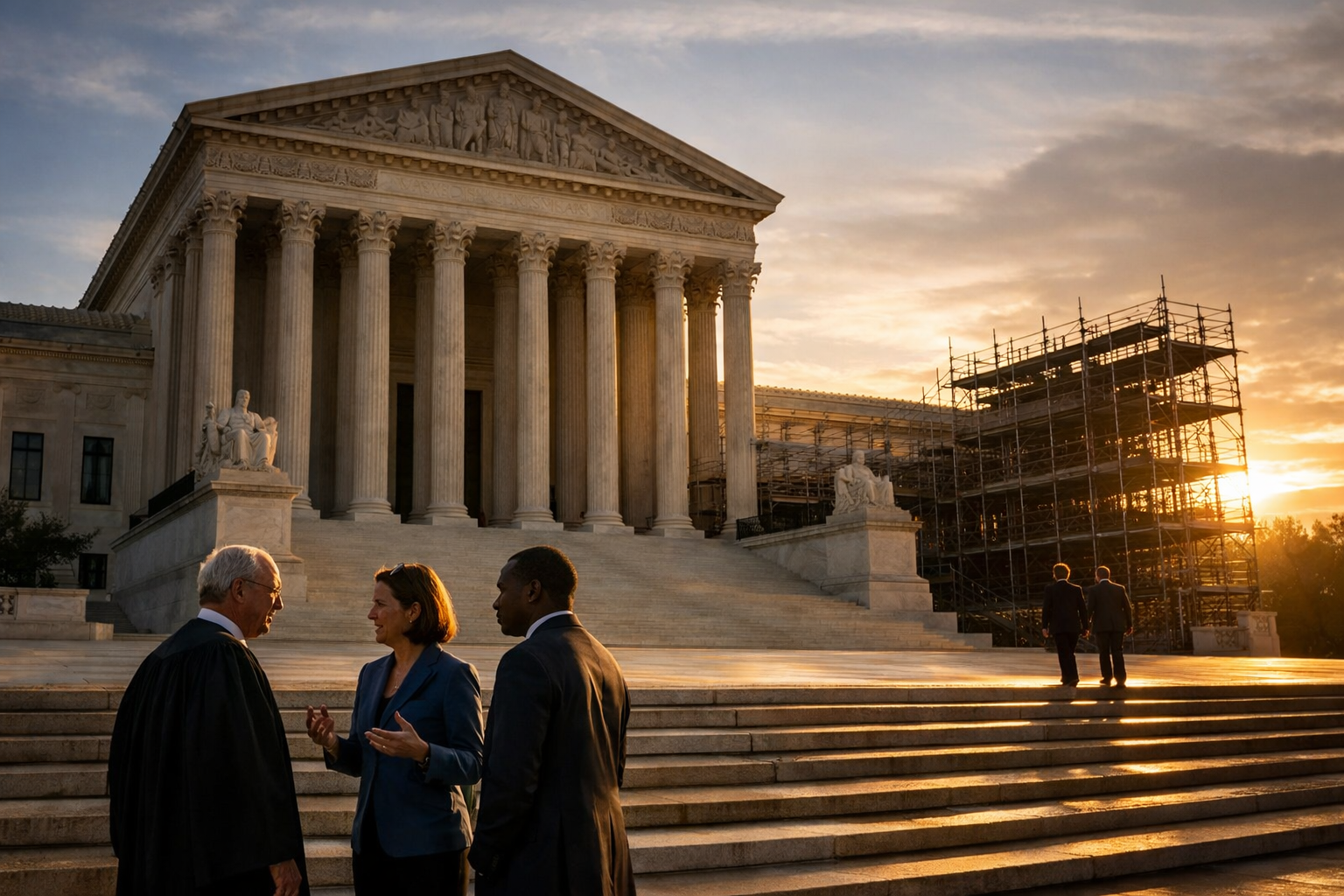
Tomorrow, April 27, the U.S. Supreme Court hears oral arguments in Monsanto v. Durnell, a case about whether the EPA's determination that the herbicide glyphosate (the active ingredient in Roundup) needs no cancer warning preempts state-level lawsuits against Monsanto. In plain English: if a federal agency says a product is fine, can people still sue under state law when they get hurt?
The plaintiff, known as "the spray guy," is a cancer patient who claims Roundup caused his illness. Nearly 100,000 similar lawsuits have been filed. Bayer (which acquired Monsanto) has already paid roughly $11 billion in settlements, and a proposed $7.25 billion class action received preliminary approval from a St. Louis judge on March 4, 2026.
Why should AI people care? Because the legal doctrine at stake — federal preemption — is the exact same mechanism that will determine whether the FDA, FTC, or a future federal AI regulator can shield tech companies from state-level AI harm lawsuits.
Think about it: if the Court rules that EPA approval blocks state tort claims, it creates powerful precedent for any industry regulated at the federal level. Now imagine that logic applied to an AI diagnostic tool cleared by the FDA that misses a tumor, or an autonomous vehicle approved under federal safety standards that causes a fatal crash. The preemption question is the liability question for every emerging technology, AI included.
Legal scholars have been flagging this connection for months. The AI liability landscape is a patchwork right now — the EU's AI Act takes one approach, U.S. states are drafting their own bills, and federal agencies are staking out positions. Monsanto v. Durnell could determine whether those federal positions become legal armor for companies or merely one voice in a multi-layered accountability system.
Meanwhile, the politics are spicy. NPR reports that a fight has erupted between MAHA (Make America Healthy Again) activists aligned with HHS Secretary Robert F. Kennedy Jr. and Trump administration policies on glyphosate regulation — a preview of the kind of intra-coalition tension we'll likely see when federal AI regulation gets real.
Plaintiffs' attorney Christopher Seeger, who helped negotiate the $7.25 billion settlement, has noted that plaintiffs have actually lost about half of the Roundup trials that have gone to verdict — a reminder that even massive litigation waves don't guarantee plaintiff wins at trial. Class members have until June 4, 2026 to participate in the proposed settlement.
On the corporate side, Bayer shareholders put the squeeze on CEO Bill Anderson at the company's annual general meeting, demanding accountability as litigation costs ballooned — the company paid $1.3 billion in settlement and judgment payments in 2025 alone, up from $528 million the year before. Bayer is also hedging its bets by seeking regulatory approval for a new herbicide called CropKey in the U.S., EU, Brazil, and Canada.
"Roundup isn't harmless. But it's better for farmers than the alternative." — Dan Blaustein-Rejto, Director of Food & Agriculture, Breakthrough Institute, in a Washington Post op-ed
That argument — this technology has risks but the alternatives are worse — sound familiar? It's the same framing we hear constantly in AI debates about facial recognition, generative models, and autonomous systems.
Bottom line: Watch the oral arguments tomorrow. The justices' questions will signal how broadly they're thinking about federal preemption — and that signal will echo through every AI liability debate for the next decade.
Quick Hits
🔒 Google DeepMind Publishes AI Agent Safety Framework
Google's DeepMind team released a detailed white paper this week outlining safety protocols for increasingly autonomous AI agents — systems that can browse the web, execute code, and take real-world actions on behalf of users. The framework emphasizes human-in-the-loop checkpoints, sandboxed execution environments, and graduated autonomy levels. As AI agents move from demos to production, expect this kind of safety scaffolding to become table stakes.
🏢 Anthropic Expands Claude Enterprise Offering
Anthropic continues its push into enterprise with expanded team management features, SSO integrations, and usage analytics for Claude. The company is clearly positioning itself as the "enterprise-safe" alternative in the foundation model market — leaning into its Constitutional AI branding and safety-first reputation to win over compliance-conscious organizations.
The Takeaway
The most consequential AI stories don't always have "AI" in the headline. Tomorrow's Supreme Court case is about weedkiller on its face — but the legal principle at its core will shape who can be held accountable when AI systems cause harm. That makes it one of the most important tech stories of 2026.
Keep your eyes on the Court. We'll be watching too. ☕
Sources
- Will Monsanto Roundup weedkiller lawsuits be blocked by Supreme Court?
- Bayer Shareholders Keep the Squeeze on CEO Over Roundup Lawsuits (Bloomberg)
- Bayer Shareholders Keep the Squeeze on CEO Over Roundup Lawsuits (Insurance Journal)
- How the fight over glyphosate is creating tensions
- Opinion | Roundup isn't harmless. But it's better for farmers than the alternative.
- Monsanto Weedkiller Case Could Upend Billions in Compensation
- Supreme Court to hear Roundup weed killer cancer case
- How the Supreme Court will have a major impact on the economy this spring